

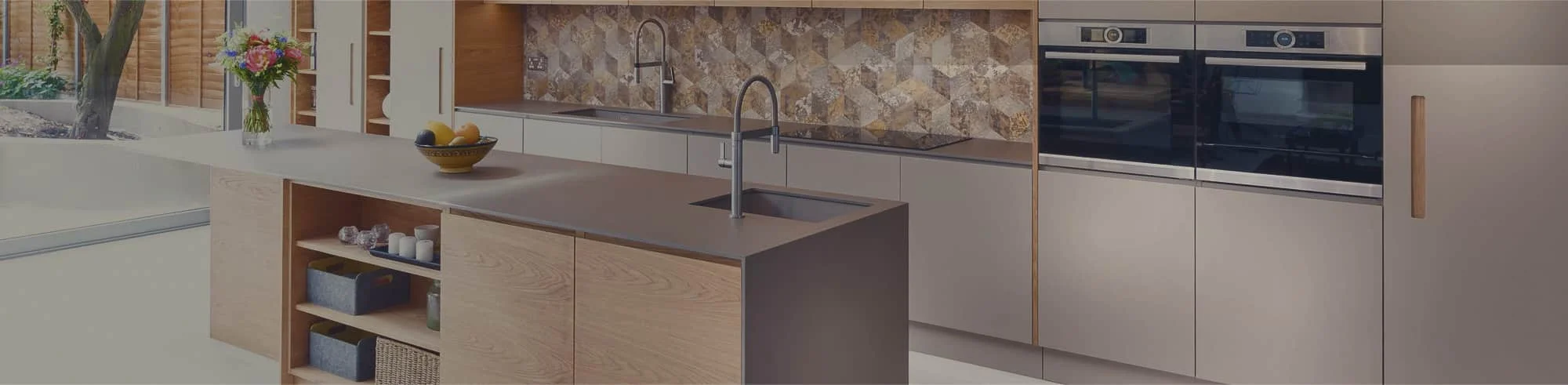
Kitchen cabinet interior accessories should be planned before ordering cabinets — not after.
Early decisions about pullouts, corner systems, trash storage, and drawer layouts ensure
better functionality and prevent costly changes later. In GTA homes, aligning accessories
with appliances and daily routines creates a kitchen that works efficiently from day one.
Most Homeowners Plan Cabinets Backwards
It usually goes like this: doors first, colours second, finishes third. Then — almost as an afterthought — they think about what goes inside.
That’s the mistake.
Kitchen cabinet interior accessories don’t adapt easily after installation. They need to be built into the plan from the very beginning. Without them, you don’t get a kitchen that works. You get a kitchen that looks good but feels frustrating every single day.
Why Accessories Need to Come First
Think of cabinets as structure and accessories as function. Empty cabinets are just boxes — useful only if what’s inside them is organized to support how you actually cook, clean, and live.
When accessories are an afterthought, the result is predictable:
- Wasted cabinet depth that can’t be reached
- Clutter that builds up because there’s no system
- Daily frustration trying to find things
- Expensive retrofit work to add what should have been there from the start
Most homeowners imagine how their kitchen will look. Few imagine how it will be used — hour by hour, meal by meal. Kitchen cabinet interior accessories are what close that gap.
A Real GTA Homeowner’s Story: What Early Planning Looks Like
Maria and her partner were renovating a 9-ft x 10-ft kitchen in their Vaughan townhome. Like most people, they started with cabinet door styles and quartz countertop options. Interior accessories barely came up.
During their design consultation at CGD Cabinets & Granite Direct, their designer asked a few simple questions:
- Where does your garbage and recycling currently go?
- Do you cook most nights, or mostly on weekends?
- What appliances do you use daily versus occasionally?
- How many people use this kitchen, and at what times?
Those answers changed everything.
Because Maria’s family cooks daily, her designer recommended deep drawer pullouts near the stove for pans, a two-compartment trash pullout under the sink, and a blind corner pullout on the left base corner instead of a lazy Susan. A spice drawer was added beside the range rather than a wall cabinet above it.
The result: a small kitchen that flows effortlessly — not because it’s large, but because every cabinet was designed around how the family actually lives.
This is what pre-planning kitchen cabinet interior accessories looks like in practice.
Plan Around Appliances First
In GTA homes — especially condos and townhomes where space is limited — appliances dictate movement. Your accessories should follow that logic.
Here’s how appliance-based accessory planning works:
- Trash and recycling pullouts belong near the sink — that’s where prep waste and rinsing happen
- Spice storage works best in a drawer beside the stove, not a tall cabinet across the kitchen
- Pan and lid storage should be in base pullouts closest to the cooking zone
- Utensil dividers belong in the drawer immediately beside the prep area
When kitchen cabinet interior accessories are positioned around appliances, the kitchen becomes efficient. When they’re placed without this logic, every task involves an extra step — and those extra steps add up.
Pullouts: The Upgrade Most People Wish They’d Added
Pullout shelves are consistently the most requested retrofit upgrade after a kitchen installation is complete — because homeowners realize too late how useful they would have been.
Without pullouts, the back half of most base cabinets becomes dead space. Things get pushed to the back, forgotten, or stacked in ways that make them impossible to access without emptying the cabinet first.
What pullout shelves actually solve:
- Full access to the entire cabinet depth, including the back
- Visibility — you can see everything without moving things around
- Less bending and awkward reaching, especially important in low base cabinets
- Better organization for pots, pans, appliances, and cleaning supplies
Pullout kitchen cabinet interior accessories are one of the highest-value additions in any kitchen renovation. They cost a fraction of what a cabinet replacement would cost later — but only work properly if planned and installed from the start.
Corner Cabinets: Solve the Problem Before It Exists
Corner cabinets are where poor planning becomes visible. Most homeowners default to whatever option is included in the standard cabinet package — and many regret it within months of moving in.
The challenge with corner cabinets is that the interior space is large but awkward. A basic shelf can hold a lot, but nothing is easy to reach, especially items pushed to the back.
Better corner cabinet accessories to consider:
- Blind corner pullouts — a two-tiered sliding system that brings the back of the cabinet forward
- Upgraded rotating systems — better-quality lazy Susans with full-extension shelves
- Sliding corner trays — a simpler option for shallow corners that works well for lightweight items
Which solution is right depends on your cabinet dimensions and how the corner connects to the rest of the layout. A designer needs to spec this before the cabinet is ordered — because once it’s installed, your options narrow significantly.
In GTA kitchens, where every inch matters, a well-designed corner cabinet with proper kitchen cabinet interior accessories can add meaningful storage to a small footprint.
Trash and Recycling: The Most Overlooked Decision in Kitchen Design
Every kitchen produces waste. But a surprising number of kitchen designs don’t properly plan where that waste goes.
When there’s no built-in solution, garbage ends up visible — a freestanding bin under the counter, a bag hanging off a door, or a bucket on the floor. It works, but it creates clutter and makes the kitchen feel less functional than it should.
What smart trash planning looks like:
- A pullout bin cabinet under the sink or beside the prep area — sized for at least two separate bins
- Separate compartments for garbage, recycling, and compost if your municipality requires it
- Placement near food prep zones, not tucked in a far corner
When kitchen cabinet interior accessories include a purpose-built trash system, waste disappears into the workflow. You don’t have to think about it — the kitchen just handles it.
This is a small decision that has an outsized impact on daily experience.
Drawer Organization: Where Daily Efficiency Lives
Drawers are the most frequently used storage in any kitchen. But without planning, they turn into junk drawers — a tangle of utensils, tools, and miscellaneous items that take time to sort through every time you need something.
The solution isn’t just adding more drawers. It’s designing them with purpose from the start.
Drawer accessories worth planning in advance:
- Cutlery organizers — fixed or adjustable inserts that keep flatware in order
- Deep drawer dividers — for pots, lids, and large utensils that need vertical separation
- Knife blocks or blade inserts — built into a drawer rather than on the counter
- Spice drawer inserts — angled trays that display labels clearly
- Peg systems — customizable for plates, bowls, and baking trays
These kitchen cabinet interior accessories make the difference between a drawer you open with confidence and one you dig through hoping to find what you need.
The Real Cost of Not Planning Ahead
Here’s the irony of kitchen design: accessories are relatively affordable when built into the original plan. They become expensive — or impossible — when added after the fact.
After installation, the cabinet opening is fixed. The drilling points are set. The hinges, pullout brackets, and drawer guides need specific clearances that weren’t accounted for. Many accessories simply won’t fit into a cabinet that wasn’t designed for them.
What late planning actually costs:
- Custom retrofits that require a cabinetmaker to revisit completed work
- Replacing cabinets entirely if the interior dimensions are wrong
- Living with a workaround — a freestanding cart, a hook on the door — instead of a real solution
- Daily inefficiency that compounds over years of use
Most kitchen cabinet interior accessories cost a few hundred dollars when ordered with cabinets. Retrofitting the same functionality later can cost several times more — or simply not be possible.
Why Pre-Planning Matters More in GTA Homes
In Toronto, Markham, Vaughan, Mississauga, and across the GTA, kitchen sizes have been getting smaller as home prices push buyers toward condos and smaller townhomes. The average GTA kitchen is compact — and compact kitchens leave no room for wasted space.
That’s exactly why kitchen cabinet interior accessories matter more here than in a large suburban home with a sprawling layout. When you don’t have extra square footage, every cabinet needs to work harder.
Pre-planning accessories in a GTA kitchen means:
- Every base cabinet has accessible storage through pullouts — no dead zones
- Corner cabinets are usable, not just present
- Waste storage is built in, not bolted on
- Drawers are organized so prep and cooking feel effortless, not chaotic
It’s not about luxury features. It’s about making a small kitchen function like a well-designed one.
A Simple Pre-Order Planning Checklist
Before finalizing your cabinet order, confirm the following:
- Where will garbage, recycling, and compost bins go?
- Which base cabinets need pullout shelves?
- What corner cabinet solution fits your layout and usage?
- What goes in each drawer — and what insert does it need?
- How do your appliances influence accessory placement?
- Are there zones for daily items versus occasional use?
Working through this checklist with a designer before ordering turns a collection of cabinets into a coordinated kitchen system.
How CGD Cabinets & Granite Direct Approaches Accessory Planning
At CGD Cabinets & Granite Direct, kitchen cabinet interior accessories are planned during the design phase — not offered as upgrades after the fact. That’s because accessories only function the way they’re intended to when the cabinet is built around them.
GTA homeowners working with CGD get:
- Customized pullout shelves and drawer systems designed around their layout
- Smart corner cabinet solutions matched to their available space
- Integrated trash and recycling storage positioned for daily workflow
- Durable cabinet construction with proper support for accessory hardware
- Quartz countertops starting at $39.99/sq.ft (minimum 40 sq.ft)
- Complete 10×10 kitchen packages from $5,999 including cabinets, quartz countertops, sink, and installation
CGD showrooms are located in Markham, Vaughan, and Mississauga, where you can explore accessory options in real kitchen layouts — not just on a spec sheet.
Contact CGD Cabinets & Granite Direct for a free estimate and plan your kitchen the right way — from the inside out.
Frequently Asked Questions
When should kitchen cabinet interior accessories be planned?
Before ordering cabinets. Accessories need to be built into the design — once cabinets are installed, options become limited and retrofitting becomes costly.
Are pullout shelves worth the extra cost?
Yes. They improve access, visibility, and organization throughout base cabinets. Homeowners who skip them often request them as retrofits later, at a higher cost.
Can accessories be added after cabinets are installed?
Some can, but options are limited by the cabinet’s existing dimensions and drilling. Built-in solutions always offer better fit and function than aftermarket retrofits.
What kitchen cabinet interior accessories have the biggest daily impact?
Trash pullouts, blind corner pullouts, and drawer organizers consistently have the highest impact on daily use. These three decisions alone significantly improve kitchen workflow.
Does this matter in smaller GTA kitchens specifically?
Especially so. In compact condos and townhomes, there’s no extra space to absorb poor planning. Every cabinet needs to work efficiently — and pre-planned accessories make that possible.