

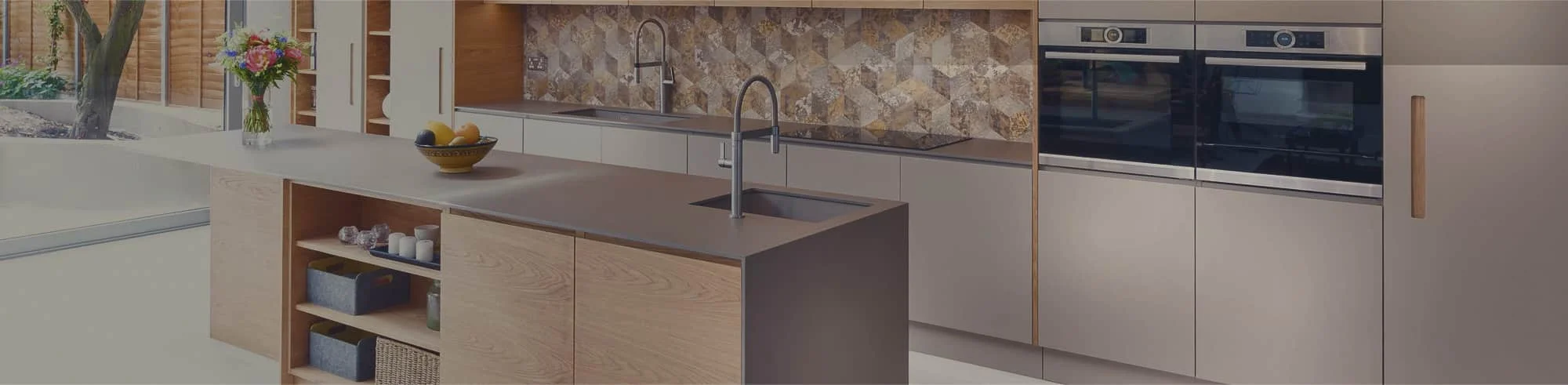
The goal is therefore not simply to add more cabinets. It is to give frequently used items logical homes that match how your family moves through the room.
Start With How Your Family Actually Uses the Kitchen
Before choosing drawer styles, cabinet colours or accessories, think about the activities that happen repeatedly in your kitchen.
Where do children usually look for snacks? Where do lunch containers come out in the morning? Where does recycling collect before someone empties it? Which appliance gets used every day but constantly takes up counter space?
These questions are useful because effective family storage is based on frequency and location. Items used together should, where possible, be stored together. Everyday items should usually be easier to reach than occasional ones. Things that create visual clutter need a convenient storage location or they are unlikely to be put away consistently.
This simple approach can make kitchen storage more useful without automatically increasing the size of the kitchen.
1. Give Everyday Food a Real Pantry Zone
Pantry storage can quickly become inefficient when breakfast food, canned goods, snacks, baking ingredients and bulk purchases are all competing for the same shelves.
Instead of treating the pantry as one large storage area, divide it into zones based on how the household uses food.
- Breakfast zone: cereal, oatmeal, spreads and other morning staples.
- Lunch zone: containers, lunch bags and frequently packed foods.
- Snack zone: items family members are allowed to access independently.
- Cooking zone: oils, dry ingredients, canned goods and frequently used seasonings.
- Back-stock zone: larger packages and items that do not need to occupy prime storage space.
In a new kitchen cabinet design, a tall pantry cabinet can provide substantial vertical storage without spreading food across several unrelated cabinets. Interior drawers or pull-out components may also make items near the back easier to access, depending on the cabinet system and available space.
2. Design One Junk Drawer on Purpose
The so-called junk drawer is not necessarily a design failure. In many family kitchens, it becomes useful because there are dozens of small everyday objects that do not justify an entire cabinet of their own.
The problem starts when those objects have no boundaries.
Instead of pretending the junk drawer will disappear, plan one deliberately. Use organizers to create small sections for items such as pens, tape, charging cables, clips, takeout menus or other household odds and ends that genuinely belong near the kitchen.
One controlled miscellaneous drawer is easier to manage than miscellaneous items spreading across countertops and several cabinets.
Just as importantly, avoid making every available drawer a junk drawer. Give the miscellaneous category a defined amount of space.
3. Put Garbage and Recycling Where the Work Happens
Garbage and recycling are part of everyday kitchen use, so their location deserves the same attention as pots, dishes or pantry food.
A pull-out waste cabinet can keep bins behind a cabinet front while allowing them to remain easy to reach. The most practical location depends on your layout, but placing waste storage reasonably close to a major food-preparation or cleanup area can reduce unnecessary movement across the kitchen.
For families that separate garbage, recycling and other household waste, discuss the required number and size of bins before the cabinet layout is finalized. A pull-out system is only helpful if its capacity fits the household’s actual routine.
4. Use an Appliance Garage to Control Countertop Clutter
Coffee makers, toasters, blenders and other small appliances can consume a surprising amount of usable countertop space.
An appliance garage is a cabinet area intended to keep selected small appliances accessible while reducing visual clutter when they are not being used. Depending on the design, it may sit directly on the counter or be incorporated into a larger cabinet arrangement.
The key is deciding which appliances deserve this space.
If your family uses a coffee maker every morning, hiding it in a difficult-to-reach cabinet may simply mean it stays permanently on the counter. A storage location that is easy to open and easy to close is more likely to become part of the routine.
Electrical requirements, appliance ventilation, clearances and manufacturer instructions should be reviewed during the design process rather than assumed. An appliance should only be operated or enclosed in a way permitted by its manufacturer and the applicable installation requirements.
5. Use Drawers Where Families Need Fast Access
Traditional lower cabinets can work well for many purposes, but deep drawers are worth considering for frequently handled items such as pots, pans, food containers or everyday dishes.
With a drawer, much of the stored contents can come toward the user rather than requiring someone to reach into the back of a base cabinet.
What belongs in those drawers depends on your household. A family that cooks every night may prioritize cookware near the cooking zone. Another family may need a large drawer devoted to lunch containers and reusable bottles.
The best kitchen cabinet design is therefore not necessarily the design with the greatest number of drawers. It is the one that places the right type of storage where it will actually be useful.
6. Give School and Family Items a Defined Drop Zone
Not everything that enters a kitchen is related to cooking.
School forms, keys, mail, reusable bottles, chargers and bags often arrive in the kitchen because it is one of the most frequently used rooms in the home. If these objects have no destination, an island or countertop can quickly become their default storage location.
If your layout allows it, consider dedicating a small section of cabinetry or drawers near the kitchen entrance to everyday family items. It does not have to be large. Even a clearly defined drawer or cabinet can help separate household administration from food-preparation space.
The important question is simple: Where will this item realistically be put when someone comes through the door?
7. Keep Everyday Items Within Practical Reach
A family kitchen normally contains items used every day, items used every week and items used only occasionally. They do not all need equally convenient storage.
Save the most accessible cabinets and drawers for the things your household repeatedly reaches for. Less frequently used serving pieces, seasonal equipment or specialty appliances may be better suited to higher or less prominent storage areas.
This is another reason to plan cabinet interiors before approving the final layout. Two kitchens can have a similar number of cabinets but function very differently depending on what each cabinet is expected to hold.
8. Pair Smart Cabinet Storage With a Practical Countertop
Cabinet layout receives much of the attention during a renovation, but busy families also rely heavily on their countertops. Breakfast, meal preparation, homework, grocery unloading and cleanup may all happen on the same work surfaces.
CGD offers both quartz and granite countertops, and each material should be considered according to the household’s priorities, appearance preferences and maintenance expectations.
Quartz surfaces are generally non-porous and do not require routine sealing. They should still be cared for according to the specific manufacturer’s instructions, particularly around heat, chemicals and abrasive cleaning products.
Granite is natural stone, so characteristics can vary from one slab or stone type to another. Some granite may benefit from sealing while other granite may not require it. Ask the supplier about the care recommendations for the exact material you select rather than assuming every granite countertop should be maintained the same way.
For a busy household, the practical question is not simply, “Which countertop is strongest?” It is, “Which surface am I comfortable caring for every day?”
9. Plan Storage Before You Finalize the Cabinet Layout
One of the easiest ways to make a cabinet plan more practical is to create a simple storage inventory before final approval.
You do not need to count every plate. Start with categories:
- everyday dishes and glasses;
- pots, pans and cooking tools;
- food containers and lids;
- small appliances;
- pantry food;
- lunch and school supplies;
- garbage and recycling;
- cleaning items;
- occasional or seasonal kitchenware.
Then ask where each category will live in the proposed design.
If several important categories do not have an answer, the layout may need more work. It is easier to change a cabinet plan before installation than to discover afterward that the blender, recycling bin or lunch containers have nowhere convenient to go.
What Good Family Kitchen Cabinet Design Actually Looks Like
For a busy household, successful kitchen cabinet design is less about creating a perfectly empty countertop and more about making organization easy to repeat.
A pantry works when family members can find what they need. A junk drawer works when miscellaneous items stay contained. A pull-out bin works when it matches the family’s waste routine. An appliance garage works when using it is more convenient than leaving the appliance on the counter.
That is the difference between storage that looks good in a design rendering and storage that continues to work on a busy weekday.
Homeowners planning kitchen cabinets in Mississauga, kitchen cabinets in Markham, or kitchen cabinets in Vaughan can use the same principle: start with everyday routines, then build the storage plan around them.
Planning a Kitchen That Has to Keep Up With Your Family?
Before choosing cabinet accessories, think through what your family cooks, stores, carries into the kitchen and leaves on the counter. CGD Cabinets & Granite Direct can help you explore cabinet layouts and countertop options based on your space and everyday needs.
Request a free estimate from CGD Cabinets & Granite Direct and start planning a kitchen with storage designed around how your household actually uses it.
Frequently Asked Questions About Kitchen Cabinet Design
What is the best kitchen cabinet design for a busy family?
The best kitchen cabinet design is one that matches the family’s daily routines. Prioritize accessible storage for frequently used food, cookware, lunch supplies and waste, while placing occasional items in less prominent areas. Pantry cabinets, deep drawers, pull-out bins and dedicated appliance storage can all be useful when they fit the household’s actual habits.
How can I make kitchen cabinets easier for my family to use?
Group items according to where and how they are used. Keep everyday dishes, food containers and pantry staples in practical locations, give miscellaneous items a defined drawer, and avoid placing frequently used items in hard-to-reach storage when a more convenient option is available.
Are drawers or cabinets better for kitchen storage?
Neither is automatically better for every purpose. Deep drawers can make cookware, containers and other frequently used items easier to see and reach, while traditional cabinets may work well for larger or less frequently accessed items. A practical kitchen often uses a combination based on what needs to be stored.
What is an appliance garage in a kitchen?
An appliance garage is a cabinet area designed to store selected small countertop appliances while keeping them relatively accessible. The exact design should account for appliance dimensions as well as the manufacturer’s requirements for operation, ventilation, heat and electrical use.
Are pull-out garbage and recycling bins worth adding to kitchen cabinets?
They can be useful when the bin size, number of compartments and cabinet location match the household’s waste routine. Plan the required capacity before selecting the cabinet rather than choosing a pull-out system based only on appearance.
Is quartz or granite better for a busy family kitchen?
Both can be appropriate depending on your priorities. Quartz is generally non-porous and does not require routine sealing, while granite is natural stone and its sealing and care requirements can vary. Consider appearance, everyday maintenance and the care instructions for the exact surface you are purchasing.
How should I plan kitchen storage before ordering cabinets?
List the major categories your kitchen needs to store, including dishes, cookware, pantry food, containers, appliances, school or lunch items, waste and cleaning supplies. Then assign each category a location on the cabinet plan. Any important item without a practical storage location should be addressed before the layout is finalized.