

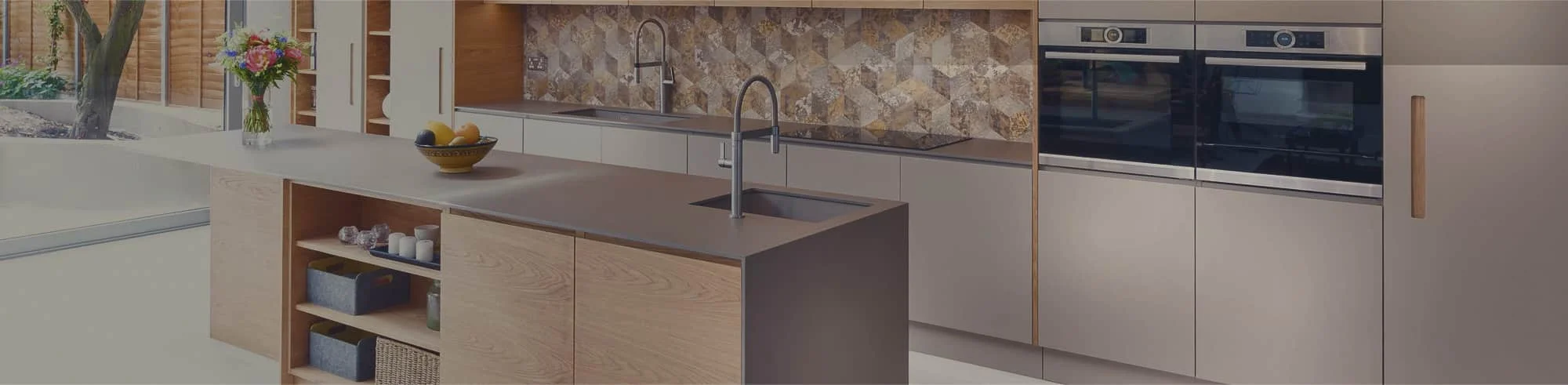
Frameless cabinets offer a modern, seamless look with more interior space and easier access — ideal for contemporary kitchens and condos. Framed cabinets include a front face frame for added strength and traditional charm. The best choice for GTA homeowners depends on your kitchen’s size, style, and how much storage flexibility you need.
What Homeowners Actually Need to Know
If you’ve started a kitchen renovation in the GTA, you’ve probably heard the terms framed and frameless cabinets tossed around.
But what does that really mean — and which one should you choose?
The truth: this isn’t just a design choice. The frame (or lack of it) changes how your doors align, how much you can store, and even how your kitchen feels day to day.
Let’s simplify what you’re actually comparing, so you can make a confident decision that fits your space, your habits, and your future plans.
What Are Framed Cabinets?
Framed cabinets are built with a solid wood face frame that sits at the front of the cabinet box. Doors and drawers attach to this frame, creating visible borders around each opening.
This is the classic North American cabinet style — common in traditional homes and still loved for its structure and timeless appeal.
Framed cabinets bring:
- Added strength and alignment stability (especially helpful on uneven walls)
- A traditional, handcrafted look
- Plenty of door style options — including inset, partial overlay, and full overlay
However, that face frame also takes up a bit of interior space — meaning slightly smaller openings compared to frameless designs.
In simple terms: if you love a detailed, classic, or transitional kitchen with character, framed cabinets deliver that aesthetic effortlessly.
What Are Frameless Cabinets?
Frameless cabinets skip the face frame entirely. Instead, doors attach directly to the cabinet box, covering it completely — which is why they’re often called full-overlay or European-style cabinets.
This design offers:
- A sleek, seamless appearance — perfect for modern or minimalist kitchens
- Wider cabinet openings and easier access to interior shelves
- More efficient use of space, especially in compact kitchens or condos
Because there’s no internal frame, every millimeter counts — drawers glide out fully, and storage feels noticeably more generous.
Frameless cabinets are common in high-end modern kitchens because they pair clean lines with functionality. They’re also ideal for smaller GTA kitchens where every inch of storage matters.
Space & Function — What’s the Real Difference?
From the outside, the difference between framed and frameless cabinets might seem purely visual. But inside, the story changes.
| Feature | Framed Cabinets | Frameless Cabinets |
| Structure | Face frame adds rigidity | Box-only design relies on precision assembly |
| Door Mounting | Attached to frame (inset or overlay) | Mounted directly to cabinet sides |
| Storage Space | Slightly reduced by frame thickness | Maximized internal width and height |
| Access | Frame slightly narrows openings | Wider openings, easier access |
| Aesthetic | Traditional or transitional | Modern, sleek, minimalist |
| Installation | Easier on uneven walls | Requires precise alignment |
In short: framed cabinets win for strength and classic detail; frameless wins for space and style efficiency.
And both can be built with premium materials like solid wood, plywood boxes, and soft-close hardware, so you’re never sacrificing quality — only deciding which advantages matter most.
What Actually Affects Cost
When comparing framed and frameless options, the price gap often comes down to build precision and materials — not the frame itself.
Here’s what influences your total investment:
- Box material — Plywood costs more but offers durability.
- Door style — Inset and full-overlay doors take more time to fit precisely.
- Hardware — Soft-close hinges, full-extension slides, and high-quality drawer glides.
- Finish complexity — High-gloss, matte, or painted finishes require more labor.
- Installation detail — Frameless requires more precise alignment during installation.
At CGD Cabinets & Granite Direct, both framed and frameless systems are available in custom and ready-to-assemble (RTA) versions — helping homeowners find the right balance between performance and price.
Choosing Based on Kitchen Type
Here’s how most GTA homeowners decide:
- For condos or smaller kitchens: Frameless cabinets maximize space and create a clean, modern flow.
- For traditional homes or large kitchens: Framed cabinets provide structure and a timeless, decorative edge.
- For transitional designs: A hybrid approach — frameless uppers with framed base cabinets — can achieve both strength and style.
No option is “better.” The right one is the one that works best for how you live, cook, and use your space every day.
Checklist — Which Style Fits You?
✅ You want a sleek, modern look → Frameless
✅ You prefer classic detailing → Framed
✅ Your walls are uneven or older → Framed adds alignment stability
✅ You need every inch of storage → Frameless maximizes space
✅ You want fast, clean installation → Frameless often installs faster in simple layouts
✅ You love flexibility in door design → Framed offers more style options
When in doubt, visit a showroom and open both styles side by side — the feel of each system tells you more than any online guide can.
Why Homeowners Choose CGD Cabinets & Granite Direct
Whether you love the seamless lines of modern frameless cabinets or the strength and detail of framed designs, CGD Cabinets & Granite Direct helps you get both beauty and performance.
- Framed and frameless options available in custom or RTA
- Soft-close hardware and solid wood construction
- Quartz countertops starting from $39.99/sq.ft (min 40 sq.ft)
- 10’×10’ kitchen packages for $5,999 — includes cabinets, quartz counters, sink, and installation
With showrooms in Markham, Mississauga, and Vaughan, our team designs kitchens that feel personal, functional, and built to last.
📞 Contact CGD Cabinets & Granite Direct for a free estimate — and see how your perfect kitchen can begin with the right cabinet style.
FAQ
Q1: What is the difference between framed and frameless cabinets?
Framed cabinets have a front face frame for added strength and a traditional look. Frameless cabinets skip the frame, giving a sleek appearance with wider openings and more usable space.
Q2: Which is stronger — framed or frameless cabinets?
Framed cabinets are slightly more rigid because the face frame adds structural strength. Frameless cabinets rely on precise construction and thicker box materials to achieve the same durability.
Q3: Are frameless cabinets better for small kitchens?
Yes. Frameless cabinets provide wider access and maximize storage, making them ideal for smaller kitchens or condos in the GTA.
Q4: Can I mix framed and frameless cabinets in one kitchen?
Absolutely. Many homeowners combine framed lower cabinets with frameless uppers to balance strength, space, and design preferences.