

What Is Full Overlay?
The Modern Standard
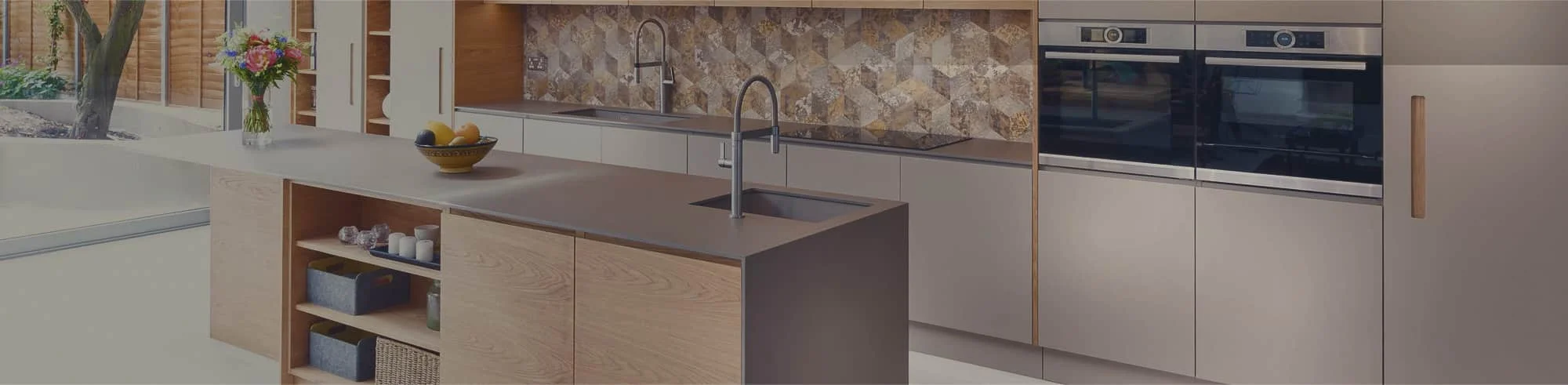
With full overlay cabinets, the door and drawer front cover almost the entire frame (or box), leaving only a thin, consistent reveal between each panel.
This creates a sleek, streamlined, modern look that feels clean and expensive — without the cost of full custom inset cabinetry.
Why GTA Homeowners Choose Full Overlay
- Modern aesthetic with smooth, clean lines
- More storage access because openings aren’t restricted
- Perfect for contemporary and transitional kitchens
- Pairs beautifully with shaker or slab doors
- Easier to clean since there’s no deep framing to trap dust
Full overlay dominates today’s remodels because it balances style, function, and budget. And at CGD, it’s one of the most popular configurations in both custom and RTA lines.
What Is Partial Overlay?
The Traditional Workhorse
Partial overlay cabinets leave more of the face frame exposed. The doors sit on top of the frame but cover only part of it.
This is the most “classic” North American cabinet style — and still loved for its simplicity and timeless charm.
Why Homeowners Choose Partial Overlay
- Cost-effective without sacrificing durability
- Traditional or cottage-style look
- Easier alignment because reveals aren’t as tight
- Excellent for rental properties or budget remodels
If you grew up seeing wooden cabinet frames around the doors, this is that look. It’s familiar, approachable, and practical — especially if your style leans warm and traditional.
What Is Inset Cabinetry?
The Luxury Option
Inset cabinets place the door inside the face frame, sitting flush with the cabinet. This creates a built-in, furniture-grade look often seen in custom, high-end kitchens.
But inset cabinetry demands near-perfect craftsmanship and precision. Even seasonal humidity changes can affect how doors sit, which is why inset is always a higher investment.
Why Homeowners Choose Inset
- Stunning, classic, furniture-style appeal
- Perfect for heritage, farmhouse, or designer kitchens
- Extremely refined and sophisticated appearance
- Clean, flush lines with evenly spaced gaps
Inset cabinetry is the equivalent of a tailored suit — precise, beautiful, and timeless. But it requires a bigger budget and hands-on craftsmanship.
Side-by-Side Comparison
| Feature | Full Overlay | Partial Overlay | Inset |
| Look | Modern, clean | Traditional, classic | High-end, furniture-like |
| Door Fit | Covers most of frame | Covers part of frame | Sits inside the frame |
| Storage Access | Excellent | Good | Slightly reduced due to frame |
| Installation Precision | Moderate | Easiest | High precision required |
| Maintenance | Easy | Easy | Requires humidity-aware adjustments |
| Cost | Mid-range | Budget-friendly | Premium |
| Best For | Modern & transitional homes | Traditional & budget remodels | High-end custom kitchens |
If your goal is modern, go full overlay.
If you want classic, choose partial overlay.
If you’re dreaming of luxury, inset is your look.
What Actually Affects Cost
Overlay style isn’t the only cost factor — but it does influence the labor involved.
What impacts pricing the most:
- Material and thickness of doors
- Frame construction (framed vs frameless)
- Precision machining (inset requires ultra-tight tolerances)
- Hardware — especially soft-close hinges
- Finish type — painted, stained, high-gloss, or matte
Frameless cabinets are always full overlay.
Framed cabinets can be partial, full, or inset.
At CGD Cabinets & Granite Direct, homeowners often choose:
- Full overlay for modern kitchens
- Partial overlay for budget-conscious remodels
- Inset for premium, custom builds that require designer-level detail
How to Choose the Right Door Fit
Here’s a checklist I’ve used with hundreds of homeowners:
Choose Full Overlay if…
- You want a modern, updated look
- You have a small kitchen and want more storage access
- You love shaker or slab doors
- You want high style without a premium price tag
Choose Partial Overlay if…
- You’re renovating a traditional or older home
- You want the most budget-friendly option
- You prefer a classic, familiar look
- You want the easiest installation and alignment
Choose Inset if…
- You’re designing a luxury or “forever” kitchen
- You love architectural details and furniture-style cabinets
- You’re comfortable investing more for craftsmanship
- Your home has stable humidity (or you plan to manage it)
Still unsure?
Visit a CGD showroom and open each style side by side — your hands will tell you what photos can’t.
Why GTA Homeowners Choose CGD Cabinets & Granite Direct
Whether you love the seamless lines of full overlay, the comfort of partial overlay, or the refined craftsmanship of inset cabinets, CGD Cabinets & Granite Direct brings the build quality, design support, and pricing that help homeowners upgrade confidently.
- Full overlay, partial overlay, and inset options
- Custom and RTA cabinetry built with solid construction
- Soft-close hardware and dovetail drawers available
- Quartz countertops starting at $39.99/sq.ft (min 40 sq.ft)
- Complete 10’×10’ kitchens from $5,999 — includes cabinets, quartz counters, sink, and installation
Visit our showrooms in Markham, Mississauga, or Vaughan to explore all three door fits in person.
📞 Contact CGD Cabinets & Granite Direct for a free estimate — and start designing a kitchen that fits your style, inside and out.
FAQ
Q1: What is the main difference between full overlay and partial overlay cabinets?
Full overlay covers most of the cabinet frame, creating a clean, modern look. Partial overlay leaves more frame exposed for a classic, traditional appearance.
Q2: Is inset cabinetry worth the extra cost?
Yes, if you want a luxury, furniture-style look and long-term craftsmanship. Inset requires precision and is priced accordingly.
Q3: Which overlay style gives the most storage access?
Full overlay (especially frameless designs) provides the widest openings and best access to interior space.
Q4: Can I mix overlay styles in the same kitchen?
You can — though most homeowners keep one consistent style for a cohesive look. In design-forward kitchens, inset uppers and full-overlay bases are sometimes paired.