

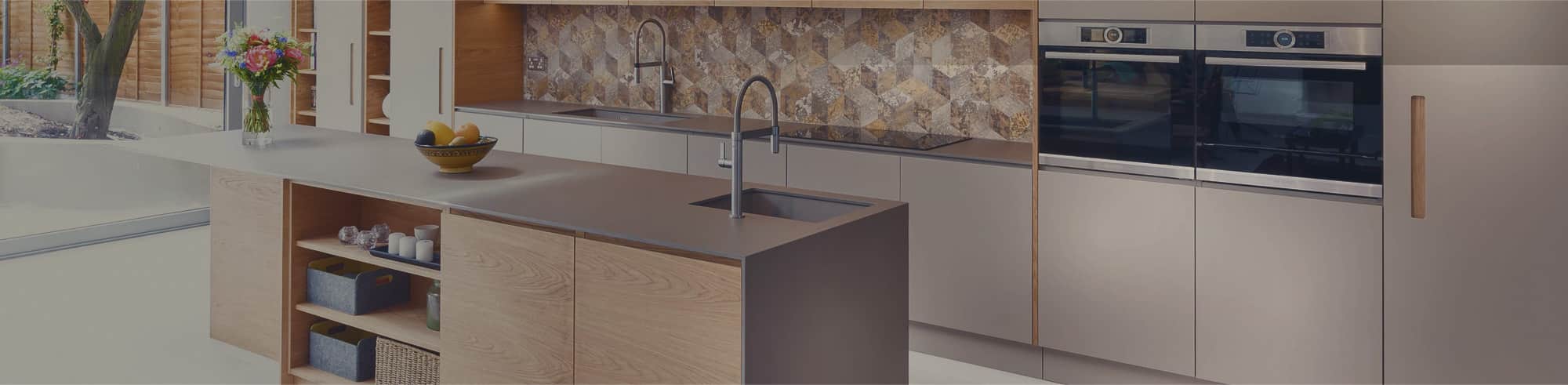
Why Granite Still Rules in GTA Kitchens
Granite countertops aren’t new. They’ve been around long enough to be called “classic,” yet every year Toronto homeowners keep coming back to them. Why? Because despite all the noise about quartz, laminate, or whatever trendy surface is being hyped, granite still gives you two things people in the GTA kitchens actually care about: toughness and timelessness.
But here’s what most homeowners don’t realize: granite itself isn’t usually the problem. The horror stories you hear—like a sink literally falling out of the counter—don’t come from the stone. They come from bad installation. A cut corner here, some silicone slapped on there, and you’ve got yourself a $5,000 problem waiting to happen.
This guide isn’t about selling you granite just because it’s pretty. It’s about showing you what other homeowners in Toronto, Mississauga, Vaughan, and Markham have gone through—budget surprises, sealing myths, warehouse trips—and how to avoid the same headaches.
The Real Pain Points GTA Homeowners Face
If you hang around long enough in online forums or just talk to neighbors going through a reno, you’ll notice the same frustrations popping up again and again:
- Installation anxiety
Granite is heavy, but weight isn’t the issue. It’s how the sink gets supported, how the seams get joined, and how the counter gets leveled. Too many homeowners in condos have had their undermount sinks drop out because installers only used silicone. No brackets. No clamps. Nothing solid. - Maintenance confusion
Some people swear you need to seal granite every year. Others say certain stones don’t need it at all. One Toronto condo owner was convinced a grease stain ruined their new top forever—turns out it just needed a poultice. The truth: sealing depends on the stone, and not all granite is created equal. - Cost surprises
Homeowners often walk in thinking, “$40 a square foot? Great!” Then the real bill comes with cutouts, edge profiles, disposal fees, and suddenly that bargain counter costs more than expected. - Old countertop disposal
Granite doesn’t fold up and slide neatly into a garbage bin. It’s bulky, brittle if handled wrong, and most of it ends up in landfills. Very few homeowners realize disposal logistics are part of the job until they’re staring at a demolition crew asking, “What now?”
Installation Done Right (and Wrong)
Granite has a reputation for being indestructible. And in a lot of ways, it is. But even the strongest stone is only as reliable as the people who install it.
Take undermount sinks. In the GTA, dozens of homeowners have reported sinks falling out because their installer took shortcuts. Using silicone alone might hold for a while, but eventually the weight of water, dishes, and day-to-day use pulls it down. Once it goes, you’re not just dealing with a sink repair—you’re facing water damage, cracked stone, and another round of reno bills.
What should happen? Brackets. Clamps. A proper support system that locks your sink in place. It’s not glamorous, but it’s what separates a counter that lasts ten years from one that fails in one.
This is why asking installers the right questions matters. Don’t just ask about colours and patterns. Ask them how they secure undermount sinks. Ask about seams and supports. Because in Toronto and Mississauga, where kitchens are busy, multi-use hubs, the small details make the biggest difference.
Granite Sealing & Stain Myths
If you ask ten homeowners in Toronto whether granite needs to be sealed, you’ll probably get ten different answers. Some will say, “Every year, without fail.” Others will insist, “My granite never needed sealing at all.” Both can be right.
Here’s the thing: granite isn’t one single stone. Some varieties are denser and less porous, while others soak up oil faster than a paper towel. That’s why two neighbors in the same Mississauga condo can have totally different experiences.
A real example: One condo owner freaked out after dropping olive oil on their new countertop. They thought it left a permanent dark mark. But when a pro came in, they used a poultice to draw the oil out and then applied a proper sealer. Counter saved. Panic over.
The takeaway for GTA homeowners: sealing isn’t about following a calendar, it’s about knowing your stone. The simple water test—sprinkle a few drops on the surface and see if they soak in—tells you more than any blog post. If it absorbs, it’s time to seal. If not, you’re good.
And don’t let sealing scare you. It’s not complicated. In fact, many installers in Toronto now offer a sealing service during installation, giving you a strong start right out of the gate.
Viewing Granite Slabs in Vaughan’s Stone District
One of the biggest shocks for first-time granite buyers? The sample you see in a showroom isn’t the whole story. Granite comes in massive slabs, and the veining, colour variations, and even little fissures can look wildly different from a 3×3 sample.
That’s why homeowners in the GTA often make a trip to Vaughan. Think of it as the stone capital of the region. Warehouses line up with rows and rows of slabs. You walk through, tag the one you want, and that exact piece gets cut for your kitchen.
A Mississauga couple’s story: They went in thinking they wanted “White Valley” granite because of the clean look in a showroom sample. But when they saw the full slab in Vaughan, it had bold grey streaks they didn’t expect. They ended up switching to “Colonial Gold” after seeing the bigger picture. That one decision saved them from years of living with something they didn’t love.
Moral of the story: always view the slab. Especially for patterned granite. No photo or showroom chip can match the real thing.
Granite Countertop Pricing in Toronto & Surrounding Cities
Here’s where most homeowners in Toronto, Markham, and Vaughan get blindsided: the advertised price per square foot isn’t the whole story.
Let’s break it down:
- Base Material: Entry-level granite starts around $40–$50 per square foot in the GTA. Premium or exotic stones can go up to $120 or more.
- Edges: Fancy edges (like ogee or waterfall) add cost. Standard eased or beveled edges are included most of the time.
- Cutouts: Every sink, cooktop, or faucet hole is a cutout, and they’re usually billed separately.
- Installation: Professional installation is non-negotiable with granite. This isn’t a DIY job unless you want a cracked slab in your driveway.
- Disposal: Removing old countertops (especially granite) comes with labour and disposal fees.
A Toronto homeowner’s story: They budgeted $3,000 for their small kitchen after seeing an ad. But once the sink cutouts, edge detail, backsplash, and disposal were added, the final invoice was closer to $4,500. Not a scam—just the reality of granite fabrication.
Pro tip for GTA homeowners: When you ask for a quote, always ask for the all-in price: slab, fabrication, install, cutouts, disposal, and sealing. That way there are no surprises when the bill lands.
Old Countertops: The Disposal Headache No One Talks About
When you picture your dream kitchen, you probably imagine the final reveal: sparkling granite, a deep undermount sink, and a backsplash that ties it all together. What nobody imagines? The demolition mess.
Granite is heavy and awkward to remove. In Toronto condos especially, hauling a 9-foot slab through hallways and elevators is more complicated than most homeowners expect. And here’s the kicker: most of it doesn’t get reused. Once granite is cut to fit one kitchen, it rarely fits another. That means disposal almost always equals landfill.
One Vaughan homeowner shared their story: Their contractor left old granite sitting in the garage for weeks because the disposal wasn’t included in the original quote. They had to scramble to hire a junk removal company just to get rid of it.
That’s why it’s worth asking upfront: Does your installer handle disposal? At CGD Cabinets & Granite Direct, we include safe removal and disposal in our estimates so you’re not stuck with a pile of stone when the job’s done.
Local Fabricators vs. Big-Box in the GTA
Here’s a common trap: walking into a big-box store because you assume it’ll be cheaper or easier. The reality? Most big-box stores don’t fabricate countertops themselves. They subcontract to the same local shops you’d find on your own—except with a markup, less transparency, and less control.
Why GTA homeowners prefer local fabricators:
- You can actually see your slab in person (Vaughan warehouses are open for this).
- You know who’s doing the fabrication, not just the sales rep.
- Pricing is clearer. What looks like a “deal” at a big-box often ends up costing more once fabrication and install get added.
If you’re weighing your options, it helps to compare line by line. Our team at CGD often walks homeowners through quotes they’ve received elsewhere, breaking down what’s included, what’s missing, and where hidden costs creep in.
Why Granite Still Wins in Toronto Kitchens
Yes, quartz has become the trendy choice. But for many families in Toronto, Mississauga, and Markham, granite still wins. Why?
- Heat resistance: Hot pans, boiling pots—granite can handle it without scorching.
- Unique look: No two slabs are the same. It’s natural art on your kitchen island.
- Resale value: Realtors still point out granite in listings because buyers know it’s premium.
- Longevity: With the right install and sealing, granite can outlast the cabinets under it.
A Markham family’s story: They almost chose quartz but went back to granite after realizing how much cooking they do. They didn’t want to worry about hot pans or scratches. Three years later, they’re still happy with the choice—minimal upkeep, maximum durability.
When it’s installed right, granite doesn’t just look good—it works hard for decades. That’s why our showrooms in Mississauga and Vaughan are full of homeowners choosing granite even in 2025.
FAQ: Granite Countertops in the GTA
Q: Do granite countertops need sealing in Toronto homes?
Yes. Some granite is dense enough to resist stains naturally, but many types benefit from sealing every 1–3 years. Our installers will test your stone and apply the right sealer during installation.
Q: How much does granite cost in Toronto, Mississauga, or Vaughan?
Expect anywhere from $40–$120 per square foot, depending on the colour and edge detail. Always ask for an all-in quote that includes cutouts, installation, and disposal.
Q: Should I see the slab before buying?
Absolutely. Especially with veined stones. Vaughan warehouses are the go-to for GTA homeowners to view full slabs before they’re cut.
Q: What happens to old granite countertops?
Most end up as waste since they’re cut for one specific kitchen. At CGD, we handle safe removal and disposal so you don’t get stuck dealing with the mess.
Q: What’s the difference between local fabricators and big-box stores?
Big-box stores usually subcontract to local fabricators anyway, but at a markup. Working directly with a local team like CGD Cabinets & Granite Direct gives you better pricing, transparency, and slab viewing options.
Book Your Free Estimate
If you’re renovating in Toronto, Mississauga, Vaughan, or Markham and want granite countertops installed the right way, we’re here to help.
Come walk through our Vaughan stone warehouse. Touch the slabs. See the difference between samples and reality. Talk to a designer who’ll explain sealing, cutouts, disposal, and everything in between.
👉 Book your free estimate today and bring home a countertop that will last for decades—not just until the next renovation trend comes along.