

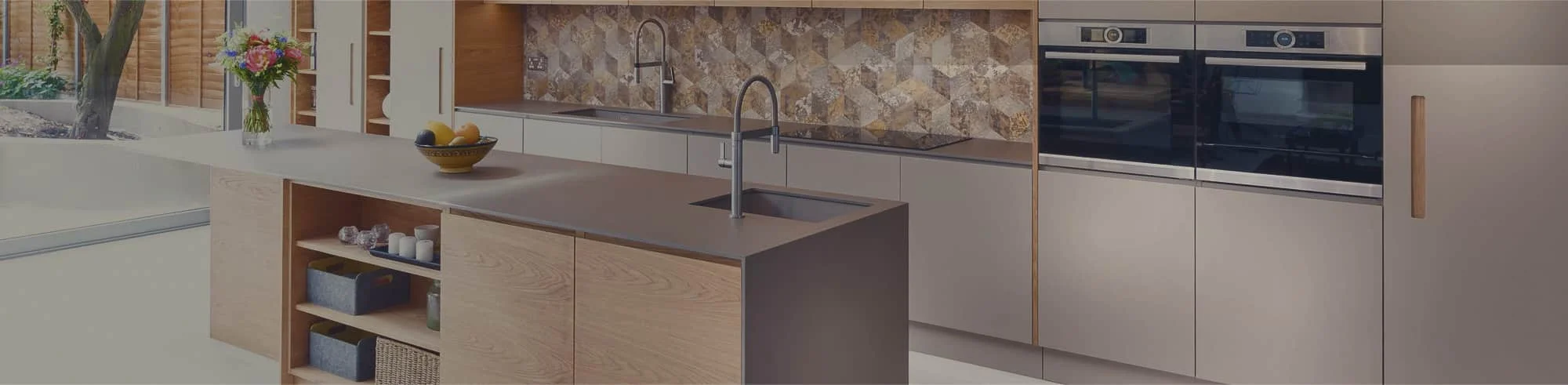
Quick answer: To make affordable custom kitchen cabinets look high-end, keep colours and finishes consistent, size the hardware in proportion, use crown moulding only where it suits the style, plan lighting early, match the quartz to the cabinet undertone, and keep lines and transitions clean. Spend on the details you see every day and keep the rest simple.
Two kitchens can have similar budgets and look completely different. One feels like a showroom. The other feels like a collection of good products that were never introduced to each other.
The difference is rarely one expensive upgrade. It is how the details work together: cabinet colour, hardware, moulding, lighting, countertops and the lines between one cabinet and the next.
If you are planning custom kitchen cabinets and want a premium look without luxury pricing, the goal is not to spend more everywhere. It is to spend on the details people actually notice, and keep the rest simple.
In this guide:
- What makes custom kitchen cabinets look high-end?
- 1. Colour and finish consistency
- 2. Hardware in the right proportion
- 3. Crown moulding and finished details
- 4. Lighting with a purpose
- 5. Quartz countertops that match the cabinets
- 6. Clean lines and transitions
- Where to spend and where to simplify
- FAQ
What Makes Custom Kitchen Cabinets Look High-End?
A high-end kitchen is rarely defined by one feature. It feels intentional. Doors line up. Colours relate to each other. Hardware supports the cabinet style instead of competing with it. The countertop, backsplash and cabinetry look chosen together, not at different times.
That is good news on a practical renovation budget. Instead of upgrading everything, you can focus on a handful of highly visible decisions and keep less noticeable elements simple.
1. Keep Cabinet Colours and Finishes Consistent
Colour consistency is one of the simplest ways to make a kitchen feel considered. It does not mean every surface must match. It means the colours should have a clear relationship.
Two different whites can look very different side by side. One may have a warm, creamy undertone while another looks cooler or slightly grey, and the gap becomes obvious when a long run of cabinets sits beside a quartz countertop or backsplash.
Try this before you decide:
- Place the cabinet sample directly beside the countertop, backsplash and flooring samples.
- Look at them in morning light, afternoon light and under your evening lighting.
- Limit the palette. A coordinated set of colours reads as intentional; several attractive colours chosen separately usually does not.
2. Choose Simple Hardware in the Right Proportion
Hardware is a small detail, but it repeats across every door and drawer, which gives it real visual weight.
Clean bar pulls, simple knobs or understated handles tend to work well because they support the cabinet door instead of competing with it. Scale matters just as much as style. A handle that looks balanced on a small drawer can look undersized on a wide pot drawer.
A common designer guideline is the one-third rule: choose a pull whose overall length is about one-third the width of the drawer. On a 30-inch drawer, that means a pull of roughly 10 inches. Measure the full tip-to-tip length, not just the spacing between screw holes. Treat it as a starting point rather than a law. On very wide drawers (over about 36 inches), one long pull or two smaller pulls can both work.
Keeping to one or two metal finishes across the kitchen also helps it feel calm. If the cabinet door already has strong detail, simpler hardware keeps the overall look from becoming busy.
3. Use Crown Moulding and Finished Details Selectively
Crown moulding can create a more complete transition between upper cabinets and the ceiling, especially in traditional or transitional kitchens. But more moulding does not automatically mean a more expensive-looking kitchen.
Match it to the style. Detailed traditional doors can carry more decorative moulding, while modern or transitional custom kitchen cabinets often look better with flat, simple trim or no decorative crown at all.
Also check the parts that are easy to forget:
- End panels and exposed cabinet sides that should match the door finish
- Fillers that close gaps between cabinets and walls
- Toe kicks that finish the base of the run
These may not be the first things you select, but they strongly affect how complete the installation feels. Spend where a finished detail improves a visible transition, not on trim everywhere.
4. Add Lighting Where It Has a Purpose
Lighting changes how cabinets and countertops are perceived. Under-cabinet lighting is especially useful: it adds task lighting to your work surfaces, reduces shadows from the upper cabinets and brings out the backsplash and countertop pattern.
Consistency matters here too. Many lighting suppliers recommend using one colour temperature throughout a room (3000K is common in kitchens, though some people prefer a warmer 2700K) and choosing lights with a high colour rendering index (CRI 90 or above) so cabinet and quartz colours look true. Mixing warm and cool bulbs in the same kitchen is one of the easiest ways to make good finishes look off.
Plan the lighting, cabinet layout and electrical requirements together before installation. Any new wiring should be done by a licensed electrician in line with local electrical code. A simple lighting plan that supports how you actually use the kitchen usually feels more refined than adding fixtures for decoration.
5. Coordinate Quartz Countertops With the Cabinets
Cabinets cover a large vertical area of the kitchen and countertops cover a large horizontal one. Because both dominate the room, choosing them together makes a major difference.
Quartz countertops suit a coordinated palette because they come in a wide range of colours and patterns. Quartz is also non-porous and does not normally need sealing. One care note: keep hot pans off the surface and use a trivet, since extreme heat can damage quartz.
When choosing, do not simply pick the most dramatic pattern in the showroom.
- Start with undertone. A warmer white cabinet often pairs naturally with a soft white or warmer vein, while a cooler cabinet may suit a cleaner white, grey or restrained pattern.
- Avoid the near-match. When two surfaces are almost the same colour, it can look less intentional than a clear contrast.
- Balance the pattern. If the cabinets already have strong grain or detailing, a quieter countertop lets the cabinets lead.
You can also use CGD’s Virtual Kitchen Designer to compare cabinet, countertop, backsplash and flooring combinations before you commit.
6. Pay Attention to Clean Lines and Transitions
This is the least exciting part of cabinet shopping and one of the most important. Look at where doors meet, the space beside the refrigerator, the end of each cabinet run, and the areas around an island and against walls.
Small irregularities are sometimes unavoidable because real homes are rarely perfectly square. That is exactly why fillers, panels and transitions need to be planned. With custom kitchen cabinets, dimensions can be designed around your actual space instead of forcing the room to fit standard sizes.
Longer, cleaner cabinet lines with fewer interruptions help the eye move through the room. This is especially helpful in modern and transitional kitchens, where too much visual detail can work against the design.
Where to Spend and Where to Simplify
If the budget is fixed, do not spread upgrades evenly. Start with what you see repeatedly, then simplify the rest.
| Element | Worth the budget | Fine to keep simple |
|---|---|---|
| Cabinet doors | A consistent finish across the whole kitchen | A complicated door profile paired with cuts elsewhere |
| Hardware | Pulls sized in proportion to each drawer | Many different decorative styles and finishes |
| Moulding | Trim that matches the door style and closes visible gaps | Decorative crown everywhere |
| Lighting | Planned under-cabinet lighting in one colour temperature | Extra decorative fixtures |
| Countertop | Quartz that matches the cabinet undertone | A dramatic pattern that competes with the cabinets |
| Transitions | Planned fillers, finished end panels, clean appliance surrounds | Extra add-ons around them |
Custom does not have to mean fully custom everywhere. CGD offers stock, semi-custom and fully custom cabinets. Asking which parts of your kitchen truly need to be custom, and which can be semi-custom, is a practical way to keep the budget under control while still getting a design that fits your space.
Common mistakes that make a kitchen look less finished
- Choosing cabinet, countertop and backsplash colours at different times, without comparing them together
- Using hardware that is too small for wide drawers or too large for narrow ones
- Mixing too many metal finishes or lighting colours
- Adding moulding that does not match the door style
- Leaving fillers, end panels and appliance surrounds as an afterthought
Before you visit a showroom
Bring photos of kitchens you like, rough measurements, samples or photos of your flooring and wall colour, and a list of the appliances you plan to keep or replace. CGD’s process starts with a consultation and rough measurements, followed by a free 3D design of your space, and there are showrooms in Markham, Mississauga and Vaughan.
A Simple Rule: Spend on Cohesion, Not Decoration
If you want custom kitchen cabinets to look more high-end without pushing every selection into a luxury price range, focus on cohesion. Keep colours intentional. Choose hardware that fits the cabinet style. Add moulding only where it improves the design. Plan lighting early. Coordinate the quartz with the cabinets. And pay attention to the small transitions that make an installation look complete.
You do not need the most expensive version of everything. You need the right details working together.
Planning a kitchen renovation in Toronto or the GTA? CGD Cabinetry can help you compare cabinet styles, colours, quartz options and layouts based on your space and budget.
Request a free estimate for your custom kitchen cabinet project.
This article offers general design guidance. Every kitchen is different, so confirm measurements, wiring and installation details with qualified professionals.
Related reading
- Kitchen cabinet design: drawers or doors
- How to plan a kitchen island with custom cabinets and countertops
- Kitchen cabinet design ideas for a narrow kitchen
Frequently Asked Questions About Affordable Custom Kitchen Cabinets
Can affordable custom kitchen cabinets still look high-end?
Yes. A high-end look comes from how the details work together, not from upgrading everything. Consistent finishes, properly scaled hardware, planned lighting, a coordinated countertop and clean transitions can make a kitchen feel far more polished without pushing every selection into a luxury price range.
What cabinet colours make a kitchen look more high-end?
No single colour looks automatically more expensive. White, warm white, greige, grey, wood tones and deeper colours can all work. What matters is that the cabinet colour relates to the countertop, backsplash, flooring and lighting, so review samples together in the room’s natural and evening light.
What size cabinet pulls look best on custom cabinets?
A common guideline is a pull about one-third the width of the drawer, measured by overall length. On a 30-inch drawer, that is roughly a 10-inch pull. It is a starting point rather than a rule, and very wide drawers can use one long pull or two smaller ones.
Is crown moulding necessary for custom kitchen cabinets?
No. Crown moulding suits many traditional and transitional kitchens, but it is optional. Modern kitchens often look cleaner with flat trim or none at all. Choose moulding that matches the door style, ceiling height and overall design instead of adding it everywhere.
Is quartz a good countertop choice with custom kitchen cabinets?
Quartz is a practical match for custom cabinets because it comes in many colours and patterns. It is non-porous and does not normally need sealing. Keep hot pans off it, since extreme heat can damage the surface, and compare a sample with your cabinet finish before deciding.
Where should I spend more when designing a kitchen on a budget?
Put the budget where you see it every day: cabinet fronts, hardware, visible end panels, the countertop, lighting and the transitions around appliances or an island. Keep less visible elements simple. The right priorities depend on your layout and how you use the kitchen.
What is the difference between stock, semi-custom and custom cabinets?
Stock cabinets are pre-made and usually the quickest, most budget-friendly option. Semi-custom cabinets let you modify sizes, finishes and styles. Fully custom cabinets are built from scratch to your exact specifications. Ask which parts of your kitchen truly need full customization.